
Why Technical Founders Struggle with Marketing
On generosity, specificity, and why giving before asking might be the whole playbook early on.

I’ve spent most of my career building things: features, pipelines, products. If something was broken, I’d fix it. If something was missing, I’d build it. That always felt honest and useful.
For a while I did developer content marketing at a YC-backed open source company. We had real success there sharing tutorials, technical deep dives, and thought leadership written by engineers for engineers. We were just being useful… and it worked.
Then I started my own company and realized I needed to get customers. Obvious, right? And yet outreach and marketing have been harder than almost anything else I’ve done. Certainly harder than building the product, or figuring the technical architecture… even with some content marketing experience and SEO knowledge. That surprised me, so I started thinking about why.
Here’s what I think is actually going on.
Software engineers are wired for specificity. We think in code. We love diagrams, systems, things you can point at and say: here, this is exactly how it works. When something is vague (“unlock your potential,” “transform your workflow,” “the leading solution for X”) it fails to persuade us. It feels imprecise, and imprecise is a form of wrong.
So when marketing asks us to produce that kind of language, we freeze. We don’t know how to make a claim we can’t back up with something concrete. We don’t know how to assert value we haven’t proved yet.
But there’s something deeper going on too.
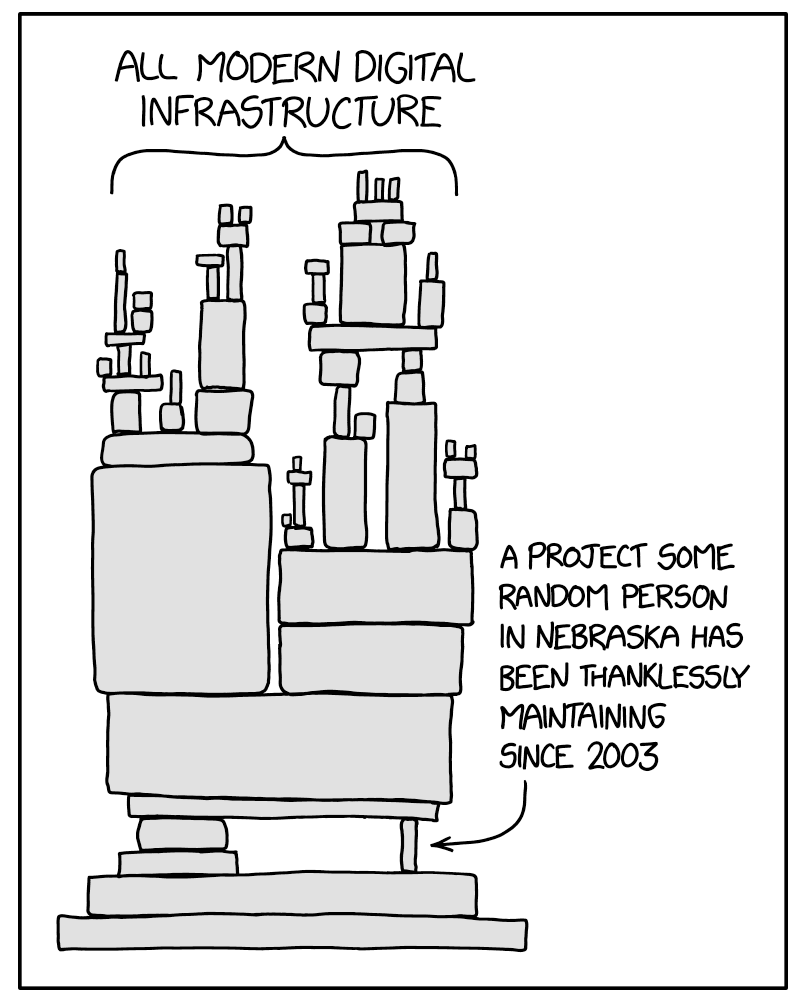
We love to give. I don’t think we talk about this enough. Look at open source: people spend weekends, evenings, years of their lives maintaining software that strangers use for free. Nobody thinks this is weird. It’s just what engineers do. We build something, we put it out there, and the idea that someone somewhere finds it useful is genuinely enough. The giving is the point.
And I think this is why traditional sales motions feel so wrong for us: not because we’re necessarily bad at business, but because we’re wired to go the opposite direction. We give first. Asking for something in return feels like a violation of something we didn’t even know we believed.
I noticed this when I was building my outreach list. I had a spreadsheet of companies I wanted to work with. The advice everywhere was: reach out, introduce yourself, ask for a call. And every time I sat down to write those messages I felt stuck. It wasn’t just anxious, but almost dishonest. Why would someone give me their time if I haven’t given them anything first? How do I convey value I haven’t demonstrated yet? Am I just interrupting their day?
So I tried something different.
I picked a company from my list. I spent an afternoon going through their blog. I found an angle they hadn’t covered, and identified an opportunity. Then I wrote a full technical tutorial for them: real code, real depth. And I sent it to a developer advocate with four sentences:
“Hi, I was going through your community guides and found an opportunity to write something. It’s a full LLM monitoring tutorial, OpenTelemetry-native with real code. Would love to see it live on your guides section, but totally fine if it’s not a fit! I just thought it was worth writing.”
He replied within the hour: “This is really cool! I’ll pass it to my team.” The CTO visited my LinkedIn profile that afternoon.
I’m not telling you this because I closed a deal. I haven’t, not yet. I’m telling you because it was the first outreach message I’d ever sent that was honest and immediately clicked with the receiver. There was no claiming expertise I hadn’t demonstrated. Just: here’s something I made, do whatever you want with it.
That feeling matters, and I think it’s a signal.
And yes, I know what you’re thinking: this doesn’t scale. Maybe not infinitely. But when you’re building something from scratch and getting your first ten customers is the whole game, this might be your best bet.
And now, I may be top of mind for that company if they ever need my product or services.
Here’s my working hypothesis. And I want to be clear, it’s still a hypothesis:
The marketing playbook for technical founders is just open source logic applied to business.
Build something useful. Make it specific. Put it out there without demanding anything in return. The people who find value in it will come to you.
This works at two levels.
One-to-one: the spec piece. You pick a person, you build something for them specifically, you give it away. High effort, but the conversion rate is much higher than a cold email ever will be.
One-to-many: the HN post, the Substack, the open source library, the free tool. You put something genuinely interesting into the world and curious people gravitate toward it. They comment, they argue, they extend it. They want their knowledge seen too, and the person who started the conversation becomes someone worth knowing, and their product becomes top of mind.
Seth Godin’s This Is Marketing has been on my nightstand this week, and it’s really the same idea: the answer is emphaty and generosity.
So instead of fighting the fact that you’re a technical founder who “doesn’t know how to market,” maybe lean into exactly that. Provide depth. Be specific. Give something real before you ask for anything.
I don’t have the case study yet. I don’t have the recurring revenue or the proof that this scales. What I have is one message that felt honest, one reply that came fast, and a hypothesis I’m testing every day.
We’ll see.